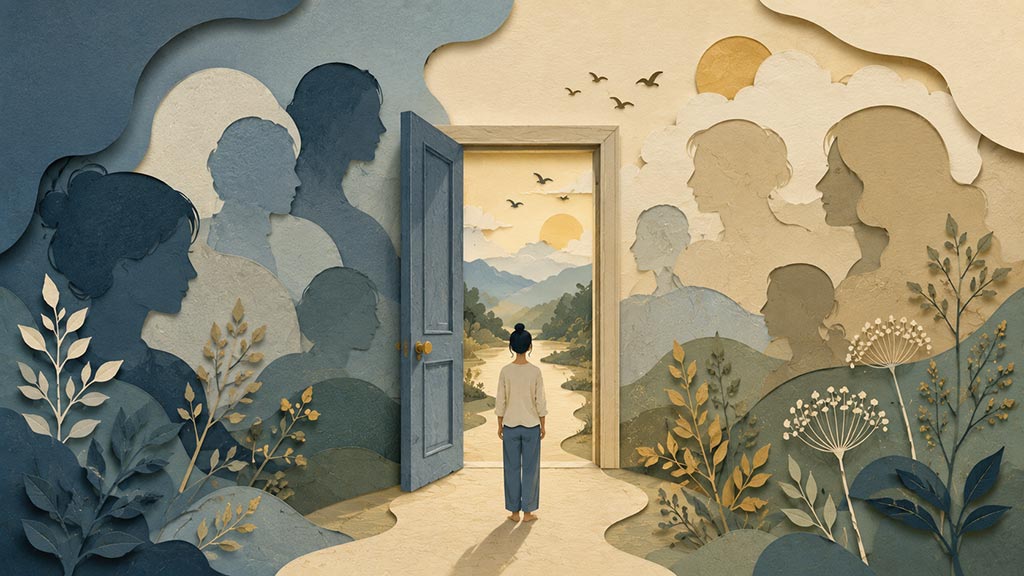
We most tend to grow up believing that every individual goes through life in about the same manner.
People have different personalities; some are more reserved, others more outgoing, some more optimistic and some more anxious. However, underneath these differences we generally suppose that the world affects us all in a similar manner.
It doesn’t.
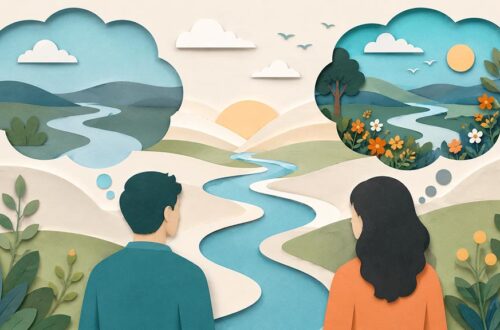
The exact same conversation can cause one person to think about it no further whereas another person will go over it for days. One individual might be profoundly touched by a piece of music, a story told by a stranger, or a peaceful sunset, while another person will enjoy the moment but then move on. In this situation neither person is correct or incorrect; they are just experiencing the world in different ways.
This is what I call Feeling Range.
Feeling Range refers to the natural variation in the way people experience, respond to, and cope with their emotional lives. It has nothing to do with being more or less emotionally strong or healthier or less healthy; instead, it concerns the form of our emotional experience rather than judging its worth.
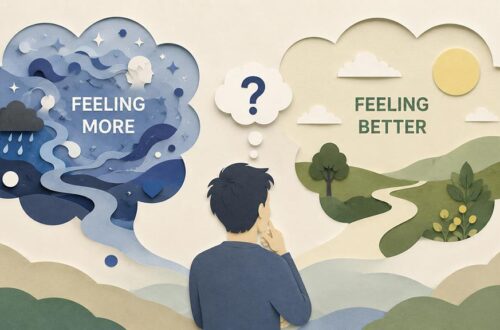
There are some people who have a more restricted range while others have a broader one and the majority of us are somewhere in between.
Neither is inherently better.
While a broader range can lead to increased empathy, creativity, appreciation, and joy, it may also cause greater feelings of overwhelm, longer periods of recovery, and a stronger influence from the surrounding world; on the other hand, a more limited range can provide steadiness, resilience, and clarity when situations overwhelm other people. Each range has its own advantages and difficulties.
Which is why Feeling Range should not be judged but rather understood. That is because once we know how our own emotional world functions, we no longer compare ourselves to people who are living their lives in a different way.
More Than Feeling “More”
At first sight, Feeling Range could appear to be all about feeling more or less. But that’s not really true. Two people can feel intensely, even if their feelings are entirely different.
Emotions in one case come with great intensity but last only a short time, whereas in another they are mild yet continue for weeks. A person might be influenced by events that take place on the other side of the world, while another is mainly affected by things that happen near to home. Some people take in the atmosphere of each room they go into, while others rarely do.
Feeling Range is not a single scale. It consists of a number of dimensions which together determine the way we experience life. It is only when you understand those dimensions that the true exploration can start.
Why It Matters
Many of us have spent years wondering:
“Why am I like this?”
Why do I need more time after difficult conversations?
Why do I still think about something that everyone else has forgotten?
Why does beauty move me so much?
Why do I become overwhelmed so easily?
Why do I absorb the mood of a room?
These questions don’t necessarily point to something that needs fixing. Sometimes they point to something that needs understanding. That is the purpose of the Feeling Range. Not to place people into categories. Not to explain everything about personality. Not to suggest that one way of experiencing life is better than another. But to offer a language for experiences that many people have felt, yet struggled to describe.
And once we have language, we can begin to understand ourselves with a little more kindness, and perhaps understand each other a little better too.