
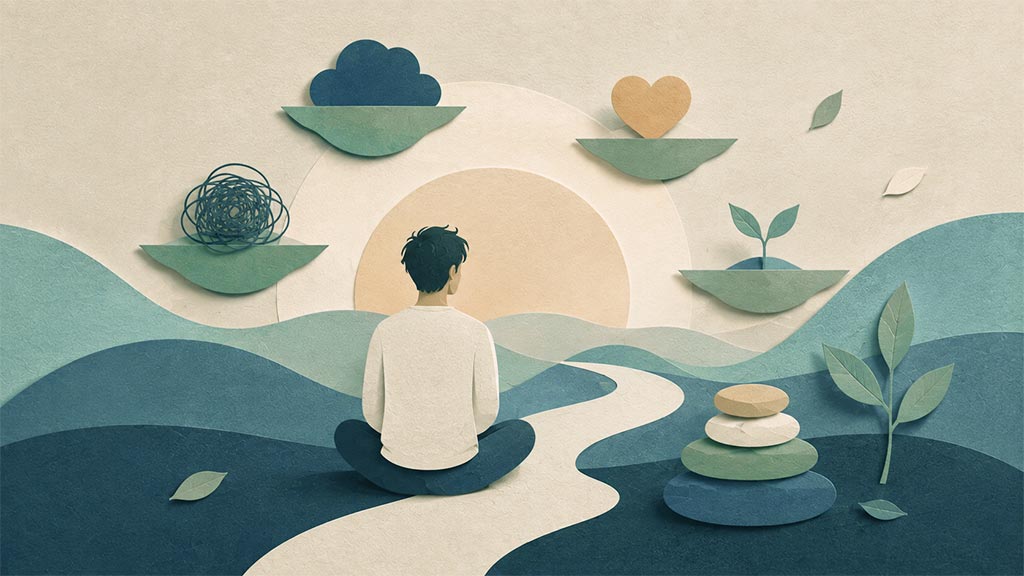
One question has helped me more than almost any other.
Not, “Should I feel this?”
Not, “How do I get rid of this?”
It’s simply this: “Where does this belong?”
The answer has changed how I understand almost every feeling I experience.
Not Every Feeling Deserves the Same Space
Imagine someone makes a quick comment about your work. It’s not especially kind or cruel. Yet by evening, it’s become the focus of your day. The conversation is over and the other person has forgotten it, but inside you, it keeps growing.
Or maybe you read a worrying news story. Soon, it affects your whole mood. Nothing has changed in your own life, but the feeling quietly takes over your mind.
This doesn’t always happen because the feeling is too strong. Sometimes, it’s just been given too much space.
Your Inner Garden Has Limited Space
Think again Picture your inner garden again. Every feeling is like a plant. Some need a big space, some just a small corner. Some are visitors, some stay for a season, and some shouldn’t have been planted at all. The gardener’s job isn’t to get rid of every tough plant, but to decide where each one belongs.re allowed to occupy the whole garden, flowers have nowhere to grow. If one tiny disappointment fills every path, joy struggles to find room.
Placement is the quiet art of arranging your inner world.
Bigger Doesn’t Mean More Important
People who feel things deeply often experience emotions very vividly. But that doesn’t always mean those feelings are more important.
A feeling can be intense, but it still might not deserve your whole day.
A criticism might echo loudly inside you, but that doesn’t mean it should become your identity.
A worry can feel urgent, but that doesn’t mean you need to act on it right away.
Feelings tell us something, but they don’t always show how much space they deserve.
That’s the job of your Centre.
Some Things Belong in Perspective
Think about the things that quietly compete for space each day: a stranger’s opinion, an awkward conversation, a mistake at work, a news headline, a social media comment, or tomorrow’s uncertainty. None of these are meaningless, but they shouldn’t rule your inner life.
When you treat everything as equally important, life gets exhausting.
Placement helps you regain perspective. It asks:
“Will this still matter next week?”
“Does this deserve to stay here?”
“What deserves this space instead?”
Making Room for What Matters
Placement isn’t just about reducing tough feelings. It’s also about protecting the good ones. How often do we rush past moments of joy, notice kindness for only a second but replay criticism for hours, or remember one mistake while forgetting many quiet successes?
Placement encourages us to change that habit and give more space to gratitude, love, beauty, friendship, creativity, and moments that nourish us.
Not because we’re pretending life is perfect, but because these things deserve space too.
The Centre Is the Gardener
Without a Centre, every new feeling wants your attention.
Every thought tries to become the main character. Every emotion thinks it should decide your day.
The Centre listens.
Then it quietly asks, “Where do you belong?”
Sometimes the answer is, “Right here. This needs caring for.”
Sometimes it is, “Not now.”
Sometimes, “Thank you for the message. You don’t need to stay.”
This isn’t about pushing feelings away. It’s about caring for them wisely.
A Skill That Changes Everyday Life
Placement is a skill that often goes unnoticed. No one sees when you practice it, but over time, your inner life changes.
You become less affected by every passing emotion, less consumed by every opinion, and less likely to confuse urgency with importance. Instead, you start arranging your inner world on purpose—not by making your garden smaller, but by caring for it wisely.
Peace rarely comes from having fewer feelings. It often comes from giving each feeling its proper place.