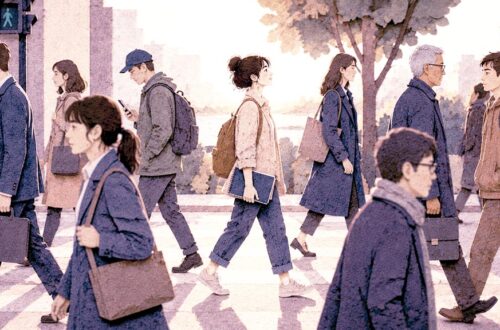

Have you ever walked away from a conversation feeling less certain about yourself than before? Maybe you met someone who seemed confident, creative, successful, peaceful, organized, or just seemed to have everything together.
There was nothing wrong with the conversation, and they didn’t criticize you. Still, something changed inside you. You started to wonder if you should be more like them.
If this happens a lot, it might not just be about comparing yourself. You may have lost your reference point.
When Other People Become the Measure
We all learn from each other. We notice good qualities in others, borrow ideas, and grow. That’s normal. The trouble starts when admiration slowly turns into following someone else’s way.
Without realizing it, someone else’s way of living can start to feel like the way you should live. Their confidence becomes your goal. Their career path becomes your guide. Their parenting style becomes your example. Their relationship becomes your expectation.
Instead of asking, “Is this right for me?”
you begin asking, “Why am I not more like them?”
That is the moment you stop living from yourself.
A Wide Feeling Range Makes This Easier
People who feel things deeply often notice more than just behavior. They pick up on style, presence, values, how someone speaks, the ease they show, their confidence, and their certainty. Sometimes, before they even realize it, someone else’s way of being has already influenced them.
This isn’t a weakness. It’s often just a sign of being very open to others.
When you are open, the world comes in not just through your feelings, but also through your sense of self.
Inspiration Is Not Imitation
One of the best things about meeting others is feeling inspired. Someone’s courage might spark your own. Another person’s creativity can remind you of something you forgot. A wise teacher can help you see new possibilities.
Inspiration helps us grow, but imitation slowly makes us lose ourselves. The difference can be hard to notice.
Inspiration says, “That quality speaks to something already alive in me.”
Imitation says, “I need to become that person.”
One helps you connect with yourself. The other slowly pulls you away from who you are.
Why Sensitive People Often Lose Themselves
People sometimes think that those who lose themselves are just too kind, too accommodating, or too dependent. But often, there’s something deeper going on.
They sense other people’s pain, feel their disappointment, notice the mood, and imagine the consequences. They see every side. By the time they try to listen to themselves, their own voice is drowned out. Their truth is still there, but it’s hard to hear under everything else.
This is why someone might say yes when they really feel like saying no, apologize even if they don’t think they did anything wrong, or change direction just because someone else seems more sure of themselves.
The Quiet Question
When you notice yourself being influenced, try asking a different question.
Not, “Who’s right?”
But, “Where am I standing?”
Can you still feel your own ground?
Can you still hear your own values?
Can you still recognise what genuinely matters to you?
This is what I call self-reference. It’s not about isolating yourself or refusing to be influenced. It’s about remembering your own center before deciding what fits for you.
Coming Home
Imagine coming back to your own garden after seeing many beautiful ones. You might admire their flowers, paths, and trees. You might even bring home a few seeds. But you don’t tear up your own garden to make it look exactly like theirs.
You ask a different question. “What would grow beautifully here?”
That is the difference between living by comparison and living by self-reference.
One asks, “Whose garden should I become?”
The other asks, “What is trying to grow in mine?”
This Is What the Centre Protects
Having a strong centre doesn’t stop you from learning from others. It actually makes learning feel safer. You can admire others without feeling small, take in new ideas without losing your own, and change because you choose to, not because you’ve faded into someone else’s way of living.
Coming home to yourself doesn’t mean you have to stay the same. It means remembering that every journey starts from where you are right now.
Only then can growth become truly your own.