Some people don’t struggle because they make poor choices. They struggle because living with uncertainty feels almost impossible. Every decision seems like it has to be the right one, the perfect one, the one that secures the future. So they keep thinking, researching, and waiting for just one more sign, one more feeling, one more bit of certainty.
But certainty rarely comes. All the while, life keeps moving on.
The Hidden Cost of Wanting the Perfect Decision
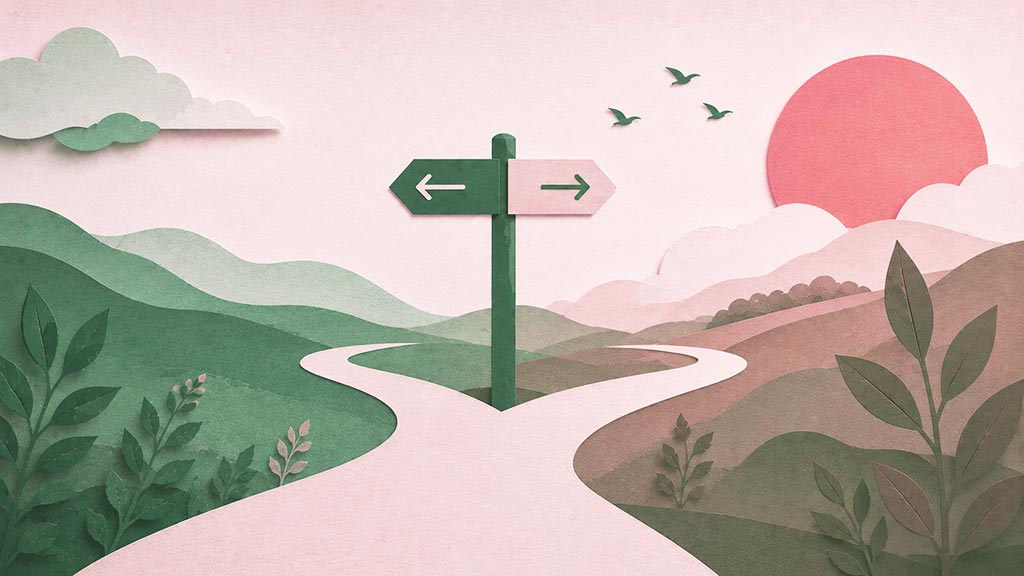
Picture yourself at a fork in a forest path. One way goes left, the other right. You check the map, look at the trees, and wonder where each path leads. You hope for a sign. After an hour, nothing about the paths has changed. The only difference is that you’re still standing in the same place.
A lot of us live like this without even noticing. We use so much energy trying to avoid making the wrong choice that we end up putting our lives on hold.
Why Wide Feeling Range Makes Decisions Harder
People who feel things deeply often see many possibilities at once. They picture different futures, different outcomes, different reactions from others, and even different versions of themselves.
This ability is a gift because it helps us understand complex situations. But it also makes every decision feel heavier than it seems. Picking one path isn’t just about choosing it—it’s also about letting go of all the other options.
Sometimes, it’s the sense of loss, not the choice itself, that feels hardest.
We Want Certainty That Life Cannot Give
The truth is, many decisions can’t be proven right or wrong ahead of time.
Should I move?
Should I change careers?
Should I end this relationship?
Should I begin that project?
Life doesn’t give us the answer before we act. It asks us to take part and get involved.
Often, we only understand our decisions after we’ve lived through them, not before.
The Centre Doesn’t Need to Know Everything
When we lose touch with our center, every decision can feel like a test.
“What if I get it wrong?”
“What if I regret it?”
“What if this changes everything?”
Our centre asks us, “Can I trust myself to handle whatever comes next?”
That’s a different kind of confidence. It doesn’t come from knowing the future, but from trusting yourself to face whatever happens.
Tolerating Uncertainty
Being able to tolerate uncertainty doesn’t mean making careless choices or ignoring what you know or feel. It means understanding that uncertainty is a normal part of life, not a sign that something is wrong.
You can gather the facts you need, listen closely, and reflect honestly. But at some point, you just have to make a choice.
Not because all your doubts are gone, but because waiting any longer isn’t helping anymore.
Every Decision Teaches You
We often think there’s one perfect path, but life is more like walking a trail than solving a puzzle. The path changes as you go, and you learn things you couldn’t have known if you stayed in one place.
Sometimes a decision brings unexpected happiness, and sometimes it brings disappointment. Both are part of your life, and neither means you failed.
Living Instead of Waiting
One of the quietest forms of courage is simply this:
Making a thoughtful decision and letting life unfold.
You don’t have to know every outcome, remove every risk, or silence every doubt. You just need enough clarity to take the next step.
Confidence usually doesn’t show up before you decide. More often, it grows as you keep moving forward.
Returning to the Centre
When a decision feels overwhelming, I find it helpful to ask myself three simple questions.
What do I know?
What do I not know?
What am I waiting for that life cannot actually promise?
Sometimes, those questions are enough—not because they take away uncertainty, but because they remind me that certainty was never the goal.
Living was.